
Skip to content
The Daily TeabagThe Daily Teabag

Section

Policy Watch

Legislation and regulation tracked against measurable citizen outcomes.

Syncrude Mildred Lake plant, Alberta — illustrative refinery-type image; not a U.S. small refinery — Photo: TastyCakes / Jamitzky, public domain

Policy Watch|United States

EPA proposes shifting 770 million extra refinery-exemption RINs onto 2026–27 fuel standards

After granting more 2025 small refinery exemptions than it had projected, EPA is co-proposing two ways to put the extra 770 million RINs back into the 2026 and 2027 Renewable Fuel Standard obligations. EPA estimates the change adds less than one cent a gallon to gasoline and diesel. Comments are due 4 December 2026; a virtual hearing is set for 4 November.

Daily Teabag Desk·Centre

Berlaymont building, European Commission, Brussels — Photo: EmDee, CC BY-SA 4.0

Policy Watch|European Union

Commission proposes one-year delay to methane rules for EU oil, gas and coal importers

COM(2026) 569, adopted 14 October 2026, would push back by a year the obligations in the EU Methane Regulation that require importers to prove their foreign supply is monitored to EU standards, and the methane-intensity reporting and limits for importers and EU producers. The Commission cites the Hormuz supply shock. Parliament and Council still have to agree.

Daily Teabag Desk·Centre
Rio Grande in Big Bend National Park, Texas — illustrative border landscape; not a worksite named in the rule — Photo: Yinan Chen, public domain

Policy Watch|United States

DHS makes permanent its ban on automatic work-permit renewals while a new card is pending

A final rule published 14 October 2026 (91 FR 65306) adopts without change the October 2025 interim rule that ended automatic extensions of Employment Authorization Documents for people who timely renew in covered categories. Asylum seekers and green-card applicants are the two biggest groups. Renewals filed before 30 October 2025 can still get up to 540 days; those filed on or after that date cannot. The rule is effective on publication.

Daily Teabag Desk·Centre
Daily Teabag policy graphic

Policy Watch|United States

EPA pushes the 2025 greenhouse-gas reporting deadline to 10 March 2027

An interim final rule published 14 October 2026 (91 FR 65112) moves the Greenhouse Gas Reporting Program deadline for reporting-year 2025 data from 30 October 2026 to 10 March 2027. Nothing else in the reporting rule changes. EPA says it needs time to finish work on a separate reconsideration proposal. Comments on this deadline shift are due 30 November 2026.

Daily Teabag Desk·Centre
Downtown Yonge Street, Toronto — illustrative; Toronto Police Service is one of 27 forces listed in the proposed order — Photo: Ken Lund, CC BY-SA 2.0

Policy Watch|Canada

Ottawa proposes letting 27 police services, from Toronto to Victoria, jam cellphone signals

A proposed Industry Minister’s order in the Canada Gazette (Part I, 10 October 2026) would exempt employees of 27 named police services, including the OPP, Sûreté du Québec, Toronto, Montréal, Calgary and Vancouver police, from the Radiocommunication Act’s ban on jammers. Until now only the RCMP, the military and prison services have been exempted. The order sets purposes and conditions, but no expiry, no warrant requirement and no public reporting of uses. Comments are open until about 9 November.

Daily Teabag Desk·Centre

Farm and silos on Île d’Orléans, Quebec — illustrative; not a site named in the bill — Photo: Guillaume666 / Antoine Letarte, CC BY-SA 3.0

Policy Watch|Canada

Budget bill would end Canada’s automatic 15-year safety re-evaluation of pesticides

Division 13 of Bill C-31, the Budget 2025 Implementation Act, No. 2, would replace the Pest Control Products Act’s mandatory re-evaluation of every registered pesticide after 15 years with an “assessment” on available information. A full re-evaluation would follow only if the Health Minister has reasonable grounds to believe risks have “increased significantly.” The finance committee heard objections last week; amendments are due 22 October.

Daily Teabag Desk·Centre

Amtrak Adirondack train at Rouses Point, New York, near the Quebec border — illustrative; the proposal does not name specific services — Photo: David McCormack, CC BY 2.0

Policy Watch|United States, Canada

U.S. border agency proposes making railways send it every cross-border passenger’s details an hour before the train leaves

A U.S. Customs and Border Protection proposed rule, scheduled for Federal Register publication on 13 October 2026, would require rail carriers to transmit each passenger’s and crew member’s name, date of birth, sex, citizenship, residence, travel-document details, itinerary, U.S. address, seat, and phone and email if given, at least 60 minutes before any train leaves for or from the United States, including trains to and from Canada. Sharing this data has been voluntary since 2005, and CBP says one carrier does it now. Comments are open for 60 days.

Daily Teabag Desk·Centre

Chugach National Forest entrance sign, Kenai Peninsula, Alaska — illustrative; no specific project — Photo: USDA Forest Service Alaska Region, public domain

Policy Watch|United States

U.S. Forest Service gives the public as little as 10 days to object to national-forest projects, down from 45

A USDA final rule, scheduled for Federal Register publication on 13 October 2026 and effective 30 days later, rewrites how people challenge logging, grazing, road and other projects on national forests and grasslands before they are approved. Comment periods drop to 15 days for environmental assessments and 30 for environmental impact statements, from 30 and 45. The window to file an objection falls to 10 or 20 days, from 45 for most projects. The independent reviewing officer is dropped, and notices move from newspapers to USDA websites. Because objecting is a precondition for suing, the shorter windows also bear on who can go to court.

Daily Teabag Desk·Centre

Rio Grande in Big Bend National Park, Texas — Photo: Yinan Chen, public domain

Policy Watch|United States

DHS makes its fast-track fines for migrants who ignore removal orders permanent, after issuing about 176,000 under the interim rule

A joint DHS–Justice final rule, published 14 October 2026 at 91 FR 65390, adopts the June 2025 interim rule that lets ICE and CBP issue civil fines directly and moves appeals from the Board of Immigration Appeals to a DHS supervisor. The only change: ICE may accept a late appeal if documented mail delays caused it. Fines run up to $998 a day for willfully failing to leave after a final removal order. The rule is effective on publication.

Daily Teabag Desk·Centre

Calgary Courts Centre, home of the Court of Appeal of Alberta’s Calgary registry — Photo: Ultimateshot, CC BY-SA 3.0

Policy Watch|Canada

Alberta’s top court rules 4–1 that Ottawa’s amended Impact Assessment Act still oversteps on provincial projects

In Reference re Impact Assessment Act, as amended, 2026 ABCA 320, released 9 October 2026, a majority of the Court of Appeal of Alberta found that the ‘designated projects’ part of the federal Impact Assessment Act and its Physical Activities Regulations remains unconstitutional except where it applies to federal undertakings. Parliament rewrote the scheme in 2024 after the Supreme Court struck down the original in 2023. One judge dissented. The opinion is advisory and the Act stays on the books unless Parliament changes it or the Supreme Court agrees.

Daily Teabag Desk·Centre

Supreme Court of Canada, Ottawa — Photo: Wladyslaw, CC BY-SA 3.0

Policy Watch|Canada

Supreme Court, 5–4, keeps a three-year term for a Mi’kmaw man who beat his partner, and tells judges to weigh sentencing circles

In R. v. Cope, 2026 SCC 32, released 9 October 2026, the Supreme Court of Canada dismissed the Crown’s appeal and left in place the Nova Scotia Court of Appeal’s cut from five years to three for aggravated assault. The majority set out a three-step method for cases where both offender and victim are Indigenous. Four judges, including the Chief Justice, dissented and would have restored five years.

Daily Teabag Desk·Centre
Centre Block, Parliament Hill, Ottawa — Photo: Ken Lund, CC BY-SA 2.0

Policy Watch|Canada

Ottawa says it will keep MAID closed to mental illness alone and allow advance requests. Hours later, the House defeats the Conservative bill 187–141

On 7 October 2026 Justice Minister Sean Fraser and Health Minister Marjorie Michel said a government bill this fall will keep the exclusion of MAID where mental illness is the sole condition “on an indeterminate basis” and will allow advance requests, with provinces deciding whether to permit them. That afternoon the House rejected Conservative MP Tamara Jansen’s Bill C-218 at second reading, 141–187. No government bill has been tabled. Under current law, the exclusion still ends on 17 March 2027.

Daily Teabag Desk·Centre

Massachusetts State House, Boston — Photo: King of Hearts, CC BY-SA 4.0

Policy Watch|United States

DHS proposes a $70,000 fee on schools for each foreign student they recommend for OPT work, and $30,000 for each repeat

A proposed rule from DHS/ICE, published in the Federal Register on 8 October 2026, would charge SEVP-certified schools $70,000 per F-1 student recommended for initial Optional Practical Training and $30,000 for any later OPT, including the STEM extension. DHS says schools may pass the cost on to students, all students, or employers. Comments close 9 November. Nothing changes until a final rule takes effect 60 days after publication.

Daily Teabag Desk·Centre

Abstract housing skyline illustration — The Daily Teabag

Policy Watch|European Union

The Netherlands revives its heat-pump rule: from 2029, many homeowners replacing a gas boiler will need a smart hybrid heat pump

In a 7 October 2026 letter to parliament, Housing Minister Elanor Boekholt-O’Sullivan said a new boiler alone will no longer meet the building code when an old one is replaced in homes not heading for a heat network. The rule would apply from 2029 at the earliest. Apartments and listed monuments are exempt at first. Who pays, and how much, is still being worked out.

Daily Teabag Desk·Centre
Abstract policy illustration — The Daily Teabag

Policy Watch|Canada

Youth drug-treatment bill C-231 clears report stage, after committee dropped its ‘no custody for refusing treatment’ clause

Luc Berthold’s private member’s bill amending the Youth Criminal Justice Act was concurred in at report stage on 6 October 2026. Police would have to consider sending youths charged with simple drug possession to treatment, and youth courts could delay sentencing so a young offender can attend a program. The justice committee deleted the original clause barring custody solely for failing to comply with a treatment condition.

Daily Teabag Desk·Centre
Berlaymont building, European Commission, Brussels — not the Court of Justice in Luxembourg — Photo: EmDee, CC BY-SA 4.0

Policy Watch|European Union

EU court: the Netherlands cannot freeze asylum claims from people under Ukraine temporary protection

In Case C-249/25 (1 October 2026), the Court of Justice ruled that automatically suspending the asylum claims of people who already hold EU temporary protection breaks EU law. Normal decision deadlines apply, though states may extend them or work through a backlog in phases. The Dutch asylum minister told NOS the ruling means about 140,000 shelved claims must now be processed.

Daily Teabag Desk·Centre
Supreme Court of Canada, Ottawa — Photo: Wladyslaw, CC BY-SA 3.0

Policy Watch|Canada

From C-48 reverse onuses to C-14: Canada’s second bail crackdown is now law

Bill C-48’s reverse onuses took effect in January 2024. Bill C-14 (Bail and Sentencing Reform Act) received Royal Assent 15 June 2026 and entered force 15 July 2026 — including a retail-focused sentencing aggravator for theft done to resell, barter, or fraudulently return goods.

Daily Teabag Desk·Slight right
Electric vehicle charging station — Photo: Julian Herzog, CC BY 4.0

Policy Watch|Canada

Ottawa proposes killing the ZEV sales mandate — while keeping fleet GHG rules

Canada Gazette Part I on 15 August 2026 proposes repealing the Electric Vehicle Availability Standard’s ZEV sales targets and credit system. Comment window runs to 29 October 2026. Fleet GHG rules would remain — this is not “EVs banned tomorrow.”

Daily Teabag Desk·Slight right
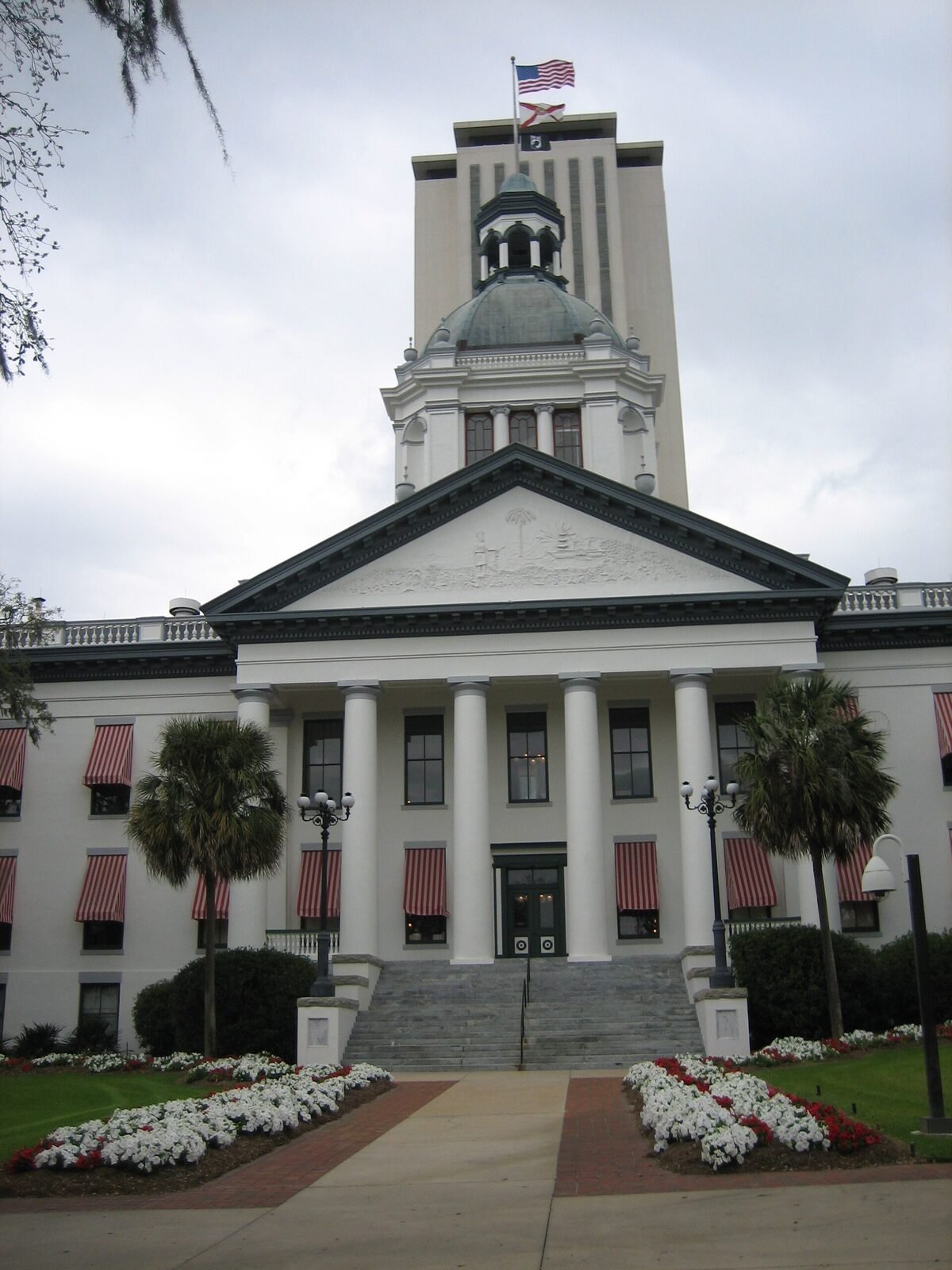
Old and new Florida State Capitols, Tallahassee — Photo: Infrogmation, CC BY 2.5

Policy Watch|United States

What Florida’s Parental Rights in Education Act actually bans — and what the 2024 settlement clarified

HB 1557 (2022) restricts classroom instruction on sexual orientation or gender identity in early grades and strengthens parental notification on student well-being. The March 2024 Equality Florida settlement left the statute intact while clarifying it is not a ban on ‘saying gay,’ library books, GSAs, or mere discussion.

Daily Teabag Desk·Centre
John Deere tractor with trailer in the Netherlands — Photo: joost j. bakker, CC BY 2.0

Policy Watch|European Union

Prinsjesdag pushback: Dutch farmers reignite the nitrogen war

Roadside fires and blockades hit Budget Day as livestock producers reject a €20-billion package they say will shrink herds — while police separately hunt who sabotaged 20+ rail sites.

Elena Vogt·Lean right