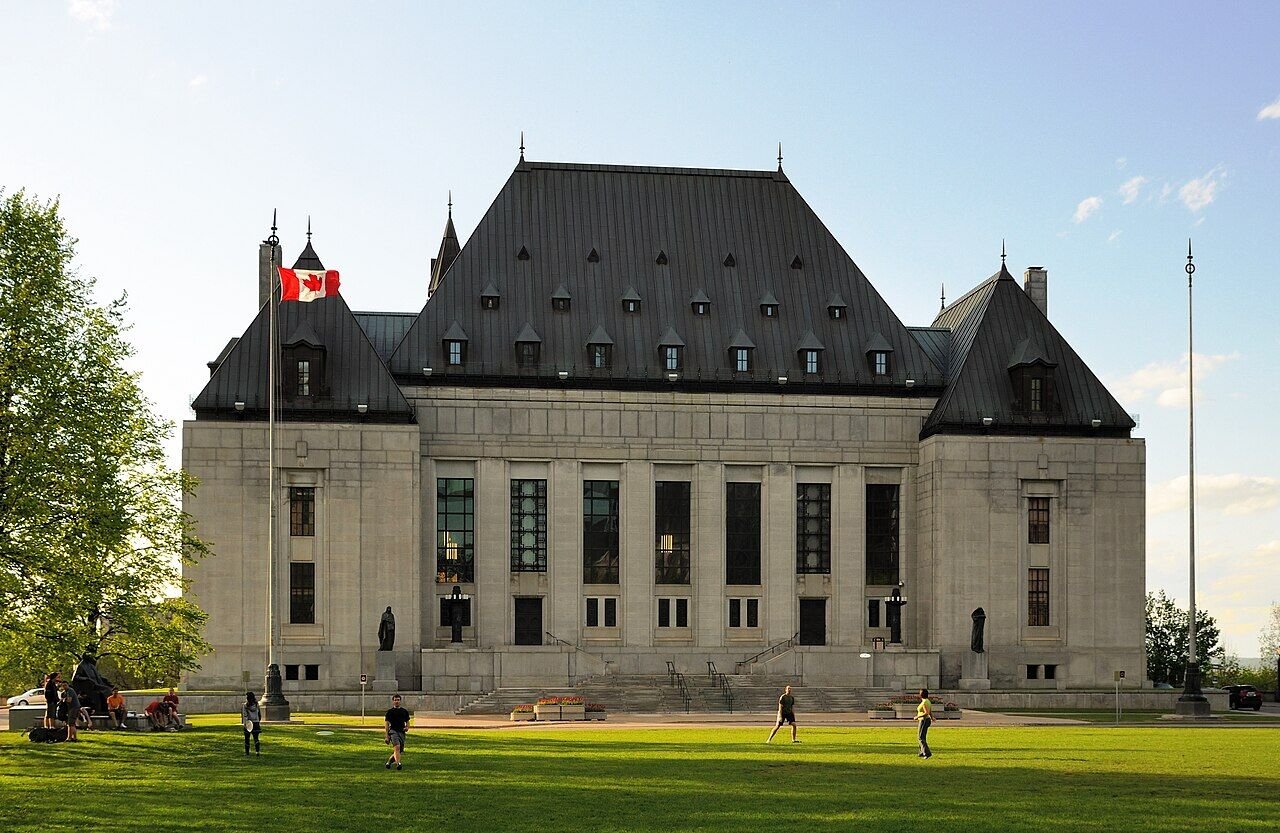
The Supreme Court of Canada released R. v. Cope, 2026 SCC 32, on Friday, 9 October 2026. Writing for five judges, Justice Michelle O’Bonsawin dismissed the Crown’s appeal (Justices Karakatsanis, Martin, Kasirer and Moreau agreeing). Justices Rowe and Jamal wrote the dissent, joined by Chief Justice Wagner and Justice Côté.
Majority: prison was required. Dissent: the appeal court ignored deference and imposed a sentence that did not reflect denunciation, deterrence or the danger the trial judge found.
The facts
In June 2021 Harry Arthur Cope, a Mi’kmaw man with severe mental-health problems, repeatedly punched his intimate partner, a Mi’kmaw woman, on a sidewalk and threw her to the ground. She suffered serious injuries to her face and upper body. He pleaded guilty to aggravated assault. He had a significant criminal record.
The Provincial Court of Nova Scotia ordered an Indigenous Background Report and held a sentencing circle, in which community members, the offender, counsel and the judge discuss a fit sentence. Community members did not recommend more jail and supported treatment instead. The judge found his background, mental illness and addictions reduced his responsibility, but also weighed the intimate-partner violence against an Indigenous woman and concluded prison was needed to protect the public. She imposed five years for the assault, plus eight months for breaching release orders.
A majority of the Nova Scotia Court of Appeal (2024 NSCA 59) cut the assault sentence to three years, less 18 months’ remand credit. It found the judge had not properly connected his mental illness, drug use and Gladue factors to his blameworthiness. The Crown appealed.
The majority
Justice O’Bonsawin wrote that ss. 718.04, 718.2(e) and 718.201, “when applied together” in a case like this, require three steps (para. 4). As the Court’s Case in Brief summarizes them: assess the gravity of the offence and the offender’s responsibility in light of both people’s Indigenous background; identify what the sentence is meant to achieve; then decide what is fair. Denouncing and deterring an offence does not always require imprisonment, the majority noted, though sometimes the need is so pressing that it does (para. 165).
On these facts, the majority said, “a sentence of imprisonment was required” (para. 11). But the trial judge did not recognize that mental illness contributed to the assault or consider how it bore on which sentence would meet the objectives, and gave too little weight to the sentencing circle. The appeal court was right to step in. The majority also said Gladue considerations “will not universally pull sentences down for Indigenous offenders” (para. 47).
The dissent
Justices Rowe and Jamal would have restored the five-year sentence. They said the trial judge accounted for all the relevant considerations, and that the appeal court “ignored this Court’s repeated direction that sentencing decisions attract significant appellate deference” and imposed “a more lenient sentence, one that did not reflect denunciation, deterrence, the victim’s vulnerability, or the sentencing judge’s conclusion that Mr. Cope poses a continuing danger to society” (para. 176). They also disagreed with the majority’s framework, saying Parliament in ss. 718.04 and 718.201 directed judges to prioritize denunciation and deterrence and generally to sentence more harshly for abuse of vulnerable victims, including Indigenous women and girls.
What this piece refuses
Do not write that the Supreme Court gave an abuser a lighter sentence “because he is Indigenous.” The majority tied the reduction to his mental illness and the sentencing circle, said prison was required, and said Gladue factors do not automatically lower sentences. Do not write that sentencing circles now decide sentences; judges still do. Do not call it unanimous; it was 5–4.
Contested: The four dissenting judges say the ruling weakens Parliament’s instruction to treat violence against vulnerable and Indigenous women severely. Supporters of the majority say it squares that instruction with Parliament’s separate direction to reduce Indigenous over-incarceration, and that the victim’s community itself asked for treatment. Parliament can amend the Criminal Code if it disagrees.
Bottom line
Verified as of 10 October 2026 from the Court’s reasons and Case in Brief: by 5–4, the Supreme Court upheld a three-year sentence (down from five) for aggravated assault of an Indigenous intimate partner and set a three-step method for sentencing when both offender and victim are Indigenous. Watch for how trial courts apply it, and for any response in Parliament.