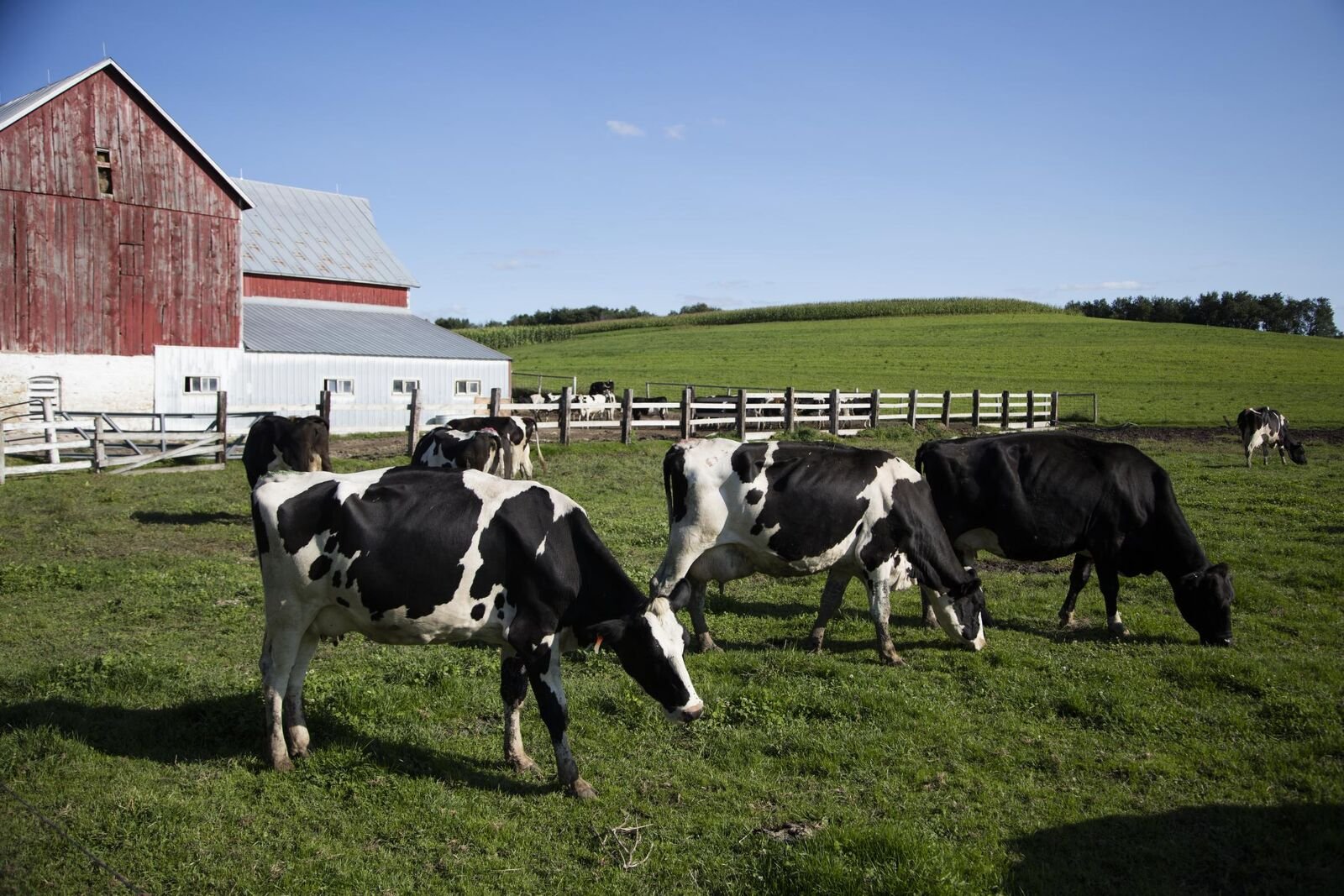
USDA pulls ESG from dairy checkoff after Wisconsin farmers sue
Three Wisconsin producers backed by WILL challenged mandatory checkoff spending on emissions and sustainability. USDA directed boards to stop; the lawsuit is paused while the order is implemented.
Why this lean: Slight-right lean (+40): celebrates a concrete USDA climbdown after producers sued over ESG checkoff spend. Agency action is the verified win; broader anti-ESG ideology is not required for the finding.
Lean score (−100 far left to +100 far right; 0 = centre) reflects how this article frames the issue — language emphasis and narrative tilt — not a verdict on truth. Data-first pieces with balanced sources trend toward centre. Disclosed for transparency; not a ranking of correctness.
Lean score (−100 far left to +100 far right; 0 = centre) reflects how this article frames the issue — language emphasis and narrative tilt — not a verdict on truth. Data-first pieces with balanced sources trend toward centre. Disclosed for transparency; not a ranking of correctness.
On 17–18 September 2026, the U.S. Department of Agriculture told the National Dairy Promotion and Research Board — and, in parallel memos, other commodity checkoffs — that assessment dollars may no longer fund Environmental, Social and Governance frameworks, net-zero, or climate-neutrality initiatives.
The directive landed after three Wisconsin dairy farmers — Abby Swan (Westfield), Adam Faust (Chilton), and Christopher Baird (Ferryville) — sued in June in the Eastern District of Wisconsin with counsel from the Wisconsin Institute for Law & Liberty. Their complaint argued mandatory checkoff fees were bankrolling ESG and sustainability programs beyond the Dairy Production Stabilization Act’s promotion/research remit, with First Amendment and APA theories layered on.
Farmers can sell milk without being forced to underwrite someone else’s net-zero PowerPoint.
Process, not dismissal: WPR (21 September) and Heartland Post report that WILL agreed to pause the case while USDA implements the new restrictions; joint status reports every 30 days keep a leash on follow-through. Dairy Management Inc. said it will “fully support” the directive and review or terminate misaligned contracts. Checkoff assessments remain (~15¢/cwt in USDA materials); the fight was about purpose, not abolishing Got Milk-style promotion.
Citizen angle: checkoffs are compulsory speech-adjacent funding. When the statutory pitch is demand-building and the spend drifts into emissions governance that raises farm cost curves, producers have a structural complaint even before ideology enters the chat. Secretary Brooke Rollins framed the move as returning checkoffs to long-term value creation for producers.
Bottom line: Watch whether DMI’s project scrub is real or cosmetic, and whether processor-side “voluntary” climate data demands continue off-checkoff. The stay is a win on paper; implementation is the story.
Presidential Proclamations 11061, 11062 and 11063 exclude specified Canadian alcoholic beverages, dairy products and motor-vehicle products from importation into the United States effective 29 September 2026 at 12:01 a.m. ET — escalating from the prior 50% Section 338 duties. CBP is rejecting covered entries in ACE. Distinct from steel tariffs that Stelco cited when idling Hamilton cold-rolled lines.
California’s new immigration-worker privacy law was written after a viral fraud hunter showed up. FIRE warned it chills speech. Shirley’s lawyers say that’s the point.
Bill C-39, the Building Canada Strong Act, is still at second reading. On 5 October 2026, the House’s first day back, the Projected Order of Business puts it first under Government Orders: resuming debate on the previous question moved by Ryan Turnbull on 25 September, with a legislative-committee referral pending. Labour Code s.107 guardrails and Indigenous consultation clocks are the live citizen fights. Update, 8 October: at midnight on 7 October the House carried the previous question on division; the second-reading recorded division is deferred to 8 October after Question Period, and its 11-member legislative committee has been named. Update, 9 October: on 8 October the House passed second reading 296–26 (Division 178) and referred C-39 to the Legislative Committee on Bill C-39, chaired by James Maloney. Conservatives and Liberals voted yes; the Bloc, the NDP and Elizabeth May voted no. The bill is not yet law.
On 3 September 2026 Denmark’s Folketing adopted Lovforslag L5, the new gødskningslov on sustainable management of nutrients and greenhouse gases in farming and forestry. It takes effect 1 January 2027 after tractor protests against tougher nitrogen controls.